

Property Buying Process in Turkey: Step-by-Step Guide for Foreigners 2026
Property Buying Process in Turkey: Step-by-Step Guide for Foreigners 2026
Buying property in Turkey as a foreigner is a straightforward process, but it involves several legal and administrative steps that differ from many other countries. This comprehensive guide walks you through every stage of the Turkish property purchase process, from obtaining your tax identification number to registering the title deed in your name. Understanding these steps in advance will help you avoid delays, hidden costs, and potential legal issues.
Step 1: Obtain Your Turkish Tax Identification Number
The first step in buying property in Turkey is obtaining a Turkish tax identification number (Vergi Kimlik Numarası). This number is essential for virtually every financial transaction in Turkey, including opening a bank account, signing a property contract, and registering utilities. You can obtain your tax ID from any Turkish tax office by presenting your passport. The process typically takes 15-30 minutes and is free of charge. Your real estate agent or lawyer can often arrange this on your behalf, saving you a trip to the tax office. The tax ID is a permanent number that remains valid for all future transactions in Turkey.
Step 2: Open a Turkish Bank Account
You will need a Turkish bank account to transfer your investment funds and pay for the property. Most major Turkish banks including Ziraat Bank, Garanti BBVA, Is Bank, and Yapi Kredi offer accounts for non-resident foreigners. You will need your passport and tax ID to open the account. Some banks require a minimum deposit of $500 to $1,000 to activate the account. It is advisable to open a foreign currency account as well as a Turkish lira account to manage exchange rate fluctuations. The bank account opening process typically takes one to two business days.

Step 3: Find the Right Property and Make an Offer
Once your finances are organized, you can begin your property search. Work with a licensed real estate agent who specializes in foreign buyers and understands the specific requirements for international transactions. Your agent should be registered with the Turkish Ministry of Trade and have a valid real estate license. When you find a property you like, your agent will help you make an offer and negotiate the price. Property prices in Istanbul are often negotiable by 5-15%, depending on market conditions, the property’s location, and the seller’s motivation. Once both parties agree on the price, a preliminary sales agreement is prepared.
Step 4: Sign the Preliminary Sales Agreement
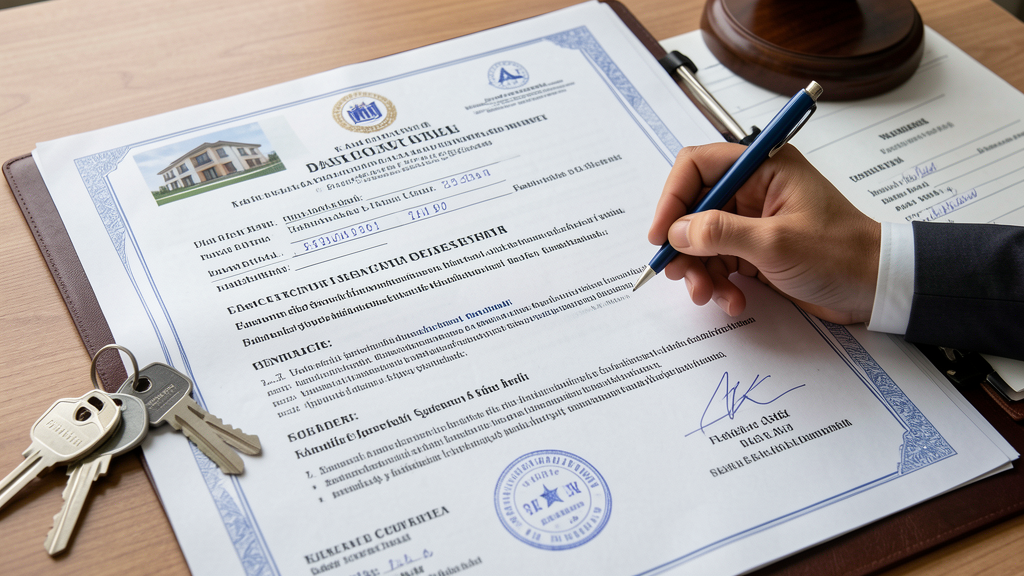
The preliminary sales agreement (Satış Vaadi Sözleşmesi) outlines the terms of the property purchase including the price, payment schedule, delivery date, and conditions. This agreement is typically prepared by a notary public and must be signed by both buyer and seller. The agreement should clearly state the property details, purchase price in foreign currency if applicable, payment terms, and any conditions such as the property being free of mortgages or liens. A deposit of 10-30% of the purchase price is usually paid at this stage. The preliminary agreement is legally binding, so have your lawyer review it before signing.
Step 5: Property Valuation and Military Clearance
Before the title deed transfer can proceed, a property valuation must be conducted by a government-licensed appraisal company. This valuation is required to confirm that the purchase price reflects the market value and to calculate applicable taxes. For properties over $400,000, the valuation is also essential for citizenship applications. The valuation typically takes three to five business days and costs $200 to $500. Additionally, foreign buyers must obtain military clearance (askeri izin) confirming that the property is not located in a restricted military zone. This clearance is typically processed by your lawyer and takes two to four weeks.

Step 6: Title Deed Transfer at the Land Registry
The title deed transfer (Tapu devri) is the most important step in the property purchase process. Both buyer and seller, or their legal representatives with notarized powers of attorney, must appear at the Land Registry Office (Tapu ve Kadastro Müdürlüğü). The necessary documents include passports, tax ID certificates, the property valuation report, military clearance, and the sales agreement. The buyer must pay the title deed transfer fee of 4% of the declared property value, though this fee is typically split between buyer and seller. The transfer process takes approximately one to two hours and results in the title deed being registered in your name.
Step 7: Register Utilities and Pay Annual Taxes
After obtaining your title deed, you must register the property for utility services including electricity, water, and natural gas. This requires your title deed, passport, and tax ID. Each utility company has its own registration process and may require a connection fee. You will also need to arrange property insurance, including mandatory earthquake insurance (DASK) and optional comprehensive building insurance. After purchase, you are responsible for annual property taxes based on the property’s assessed value, typically 0.1% to 0.6% depending on the district and property type.
Additional Tips for Foreign Buyers
Always work with a licensed real estate agent and an experienced lawyer who understands the specific requirements for foreign buyers. Never sign a property agreement without having your lawyer review it first. Keep copies of all documents related to the purchase including the sales agreement, payment receipts, valuation report, and title deed. Consider hiring a translator if you do not speak Turkish, as all official documents are in Turkish and must be accurately understood. Budget for additional costs including taxes, fees, and professional services which typically add 8-12% to the purchase price.
Frequently Asked Questions
Can a foreigner buy property in Turkey?
Yes, citizens of most countries can buy property in Turkey. There are restrictions for citizens of some countries due to reciprocity laws.
How long does the property buying process take in Turkey?
The complete process typically takes 4 to 8 weeks from initial offer to title deed registration.
Do I need a lawyer to buy property in Turkey?
While not legally required, working with a lawyer is highly recommended to ensure all legal requirements are met and your interests are protected.
Can I buy property remotely in Turkey?
Yes, you can grant a notarized power of attorney to your lawyer or agent to complete the purchase on your behalf.
Content prepared by Istanbul Real Estate editorial team · Date: July 2026
Understanding the Turkish Legal System for Property Purchase
Turkey’s property law system is based on the Turkish Civil Code and the Turkish Code of Obligations, which provide a comprehensive legal framework for property transactions. Foreign buyers are protected by the same laws as Turkish citizens, with additional provisions under the Land Registry Law that regulate foreign ownership. The system is designed to be transparent and secure, with all property records maintained digitally in the Land Registry database. Each property has a unique parcel number (ada ve parsel) that identifies its exact location, size, and legal status.
Before making an offer, your lawyer should conduct a title deed search (Tapu kaydı sorgulama) to verify that the property has no outstanding mortgages, liens, or legal disputes. This search will also confirm that the seller is the legal owner and has the right to sell the property. Any encumbrances on the title deed must be resolved before the transfer can proceed. Properties owned by companies may require additional due diligence to ensure the company has the legal authority to sell. The Land Registry system provides complete transparency, allowing your lawyer to verify all property details before you commit to the purchase.
Property Insurance Requirements for Foreign Buyers
Turkish law requires all property owners to have compulsory earthquake insurance (DASK – Doğal Afet Sigortaları Kurumu) for their buildings. This insurance covers structural damage from earthquakes, which is mandatory given Turkey’s location in a seismically active zone. DASK insurance premiums are calculated based on the property’s size, construction type, and location, typically ranging from $50 to $200 annually. The insurance must be renewed annually, and proof of valid DASK insurance is required for utility connections and some property transactions.
Beyond the mandatory DASK insurance, foreign buyers are strongly advised to purchase comprehensive building insurance (Konut Sigortası) that covers additional risks including fire, flood, theft, and third-party liability. Comprehensive insurance typically costs $200 to $500 annually for a standard apartment. For rental properties, landlord insurance with tenant liability coverage is recommended. Most Turkish insurance companies offer policies in English and can provide coverage documentation suitable for foreign property owners. Your real estate agent or property manager can assist with arranging appropriate insurance coverage.
Currency Exchange and Payment Considerations
When buying property in Turkey, you will need to transfer funds from your home country to Turkey. Most purchases are conducted in US dollars or euros, though Turkish lira transactions are also possible. The exchange rate at the time of transfer affects the total cost, so timing your currency exchange can result in significant savings. Many buyers choose to open a foreign currency account in Turkey and transfer funds in their home currency, converting to Turkish lira only when needed for specific payments.
Turkish banks require documentation for large international transfers, including proof of the funds’ source. This is a standard anti-money laundering requirement and should not cause concern for legitimate buyers. Keep all transfer receipts and bank statements as these may be required for the title deed transfer and any future citizenship application. Working with a bank that has international operations can simplify the transfer process and reduce fees. Some developers offer payment plans in foreign currency, eliminating exchange rate uncertainty during the construction period for off-plan purchases.
Power of Attorney: Buying Property Remotely
Many foreign buyers choose to purchase Turkish property without traveling to Turkey by granting a notarized power of attorney (Vekaletname) to their lawyer or real estate agent. The power of attorney authorizes your representative to sign contracts, attend the title deed transfer, and complete all legal formalities on your behalf. The power of attorney must be prepared in Turkish or as a bilingual document and notarized either at a Turkish consulate in your home country or by a Turkish notary public if you are in Turkey. The document must specify the exact powers being granted and the specific property or properties covered.
The cost of preparing a power of attorney at a Turkish consulate varies by country but typically ranges from $100 to $300. The document is valid for a specific period, usually one to three years, and can be revoked at any time. When granting a power of attorney, choose your representative carefully and ensure they are trustworthy and experienced in Turkish real estate transactions. Your lawyer should provide regular updates throughout the purchase process and send you copies of all signed documents. Many law firms offer video call updates and digital document sharing for remote clients.
Mortgage and Financing Options for Foreign Buyers
While most foreign buyers purchase Turkish property with cash, mortgage financing is available from several Turkish banks. Foreign nationals can typically borrow up to 50-70% of the property value with loan terms of 5-10 years. Interest rates for foreign borrowers are higher than those available to Turkish citizens, currently ranging from 15% to 25% annually depending on the bank and loan amount. The mortgage application process requires the same documents as a cash purchase plus additional financial documentation including proof of income, bank statements, and a credit report from your home country.
Some banks offer special mortgage products for foreign buyers including interest-only periods and balloon payment structures. Developer financing is another option, with many off-plan projects offering payment plans of 12-36 months at 0% interest. These payment plans are particularly attractive as they allow you to spread the cost without paying mortgage interest rates. For citizenship investments, paying cash is generally recommended to avoid complications with the valuation and title deed transfer. Discuss your financing options with your real estate agent and compare offers from multiple banks to find the most favorable terms.
Understanding Property Types in Turkey
Turkish property law recognizes several types of property ownership that foreign buyers should understand. The most common type for apartments is condominium ownership (Kat Mülkiyeti), which gives you ownership of your individual unit plus shared ownership of common areas. This type of ownership is available for completed buildings with an occupancy permit. For off-plan properties, condominium share ownership (Kat İrtifakı) is used until the building is completed, at which point it converts to full condominium ownership. Freehold ownership (Müstakil Tapu) applies to detached houses and land and gives you full ownership of both the building and the land it sits on.
Foreign buyers should verify the property’s construction status and confirm that the building has a valid occupancy permit (Yapı Kullanma İzin Belgesi) before completing the purchase. Properties without an occupancy permit may have legal issues that affect the title deed transfer and future resale. Your lawyer should verify all building permits and confirm that the construction complies with zoning regulations. For properties in organized residential complexes, review the site management agreement and understand your obligations for common area maintenance fees before purchasing.